Uniform? ✔
School shoes? ✔
School bag? ✔
Lunchbox? Now what goes in it?
The summer holidays are over and the school routine is gaining momentum. Whether your child is starting nursery, heading to primary school, moving up to secondary school or simply moving up after the holidays, September is a great time to reset everyday habits.
While getting everyone out the door on time can feel like an military operation (been there, doing that!), there are simple things you can do to support your child’s oral health as well as their general health and wellbeing.
Healthy smiles aren’t created by one perfect lunchbox. They’re built from small choices made day after day, after day, year round.
So, what should go into that lunchbox?
🥪 Think meals, not grazing
One of the most important oral health messages is that how often we have sugary foods and drinks matter, as well as how much sugar we have.
Every time sugar is consumed, bacteria in dental plaque biofilm produce acids which attack the teeth. Saliva helps the mouth recover, but frequent sugar attacks give teeth less chance to recover between them. Recovering from a sugar acid attack can take up to 2 hours. That’s why dental professionals recommend foods and drinks containing sugars are part of meals rather than as between-meal snacks.
So rather than filling the school bag with lots of little snacks to eat throughout the day, think: Breakfast → lunch → evening meal with tooth-friendly choices between meals where needed. (Tooth friendly choices are often best for overall health too).
We’re not about banning every food your child enjoys, rather reducing unnecessary grazing and making sugary foods and drinks less frequent.
🍎 So what makes a good school snack?
For between-meal snacks, think sugar-free, nutritious and practical. Depending on your child’s age and what their school allows, consider:
- Fresh fruit
- Fresh vegetables such as cucumber, peppers, carrots or tomatoes
- Plain bread, toast, pitta or crackers
- Plain rice cakes
- Cheese
- Plain natural yoghurt – pop some fresh fruit in if you fancy
- Hummus with vegetables
- Hard-boiled egg
- Cheese – it has the bonus of boosting salivas healing properties
Fresh fruit is absolutely fine as a snack. The naturally occurring sugars inside whole fruit are not classed as free sugars. When fruit is crushed e.g. smoothies, juice etc, or you see it in a product labelled ‘from fruit concentrate’, the sugar has been released and becomes ‘free’ becoming a risk to teeth.
Dried fruit is different. It may look like a healthy lunchbox choice but dried fruit contains concentrated sugars and can stick to teeth. Current advice is to keep dried fruit and other foods containing free sugars to mealtimes rather than between-meal snacks.
How food is presented can make a big difference to children. A colourful tub, funny-shaped sandwich or selection of bite-sized veggies can sometimes make food more appealing.
🥛 What should I give them to drink?
Water is the simple winner.
Plain water and plain milk are the best choices for children. Use a refillable bottle of water to school and encourage your child to drink regularly throughout the day. Adequate hydration is key for oral and overall health – good for their mouth, their brain and their body.
Don’t be fooled by drinks marketed as being suitable for children. Squashes, juice drinks, fizzy drinks and other sugar-containing soft drinks can be very misleading, contribute to tooth decay and have no place in a child’s everyday diet. Even drinks that sound healthy can contain free sugars. It’s a minefield! Safest – water and plain milk between meals and before bedtime.
Fruit juice and smoothies? These contain free sugars too. Limiting fruit juice and smoothies to a combined maximum of 150ml a day and having them with a meal rather than sipping them between meals is the safest way to gain the good and skip the downside. Consider drinking through a reusable straw.
Sports and energy drinks aren’t everyday drinks for children. Many contain caffeine and high amounts of sugar. If ‘sugar free’ they are generally very acidic which can lead to acid erosion and sensitivity.
🍓 What about yoghurt?
Yoghurt can be a nutritious choice, but check the label. Some children’s yoghurts and flavoured yoghurts can contain significant amounts of free sugars. Compare products and opt for plain or lower-sugar options, adding fresh fruit if your child enjoys it.
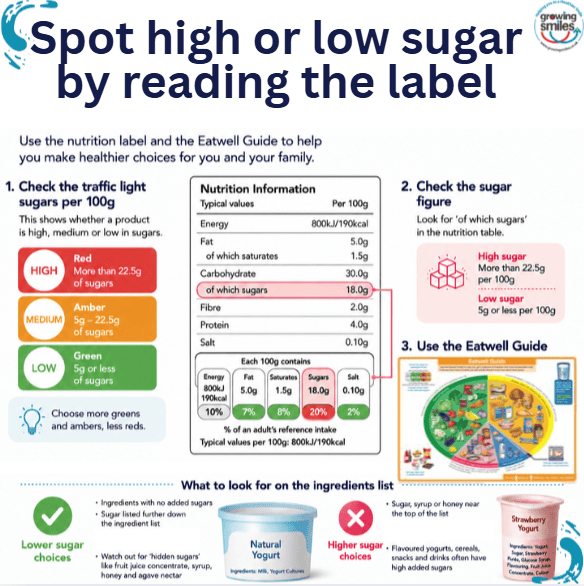
You don’t need to become a label-reading detective! Think more about the overall pattern of your child’s diet rather than stressing over one individual product.
🥪 Lunch doesn’t have to mean sandwiches!
A sandwich may be the great lunchbox staple, but there are plenty of alternatives.
- Wraps with chicken, tuna, egg or hummus
- Cheese and crackers
- Pasta salad
- Vegetable sticks with hummus
- Egg and salad
- Chicken pieces with vegetables
- Pitta bread with a savoury filling
- Homemade savoury muffins or mini quiches
- Leftovers from a healthy family meal, where practical
- Fresh fruit or vegetables
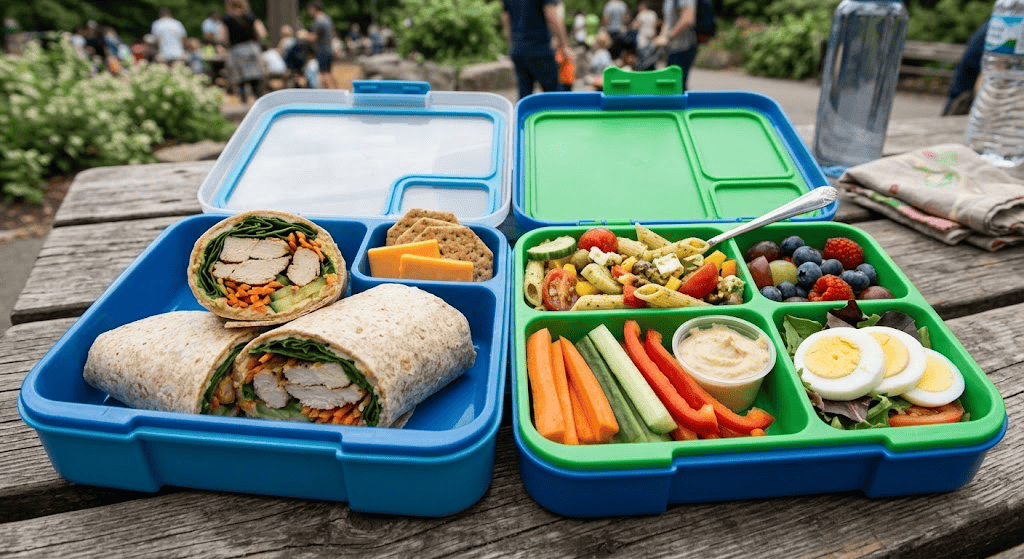
Get your child involved too. Let them choose between two or three healthy options. Help them prepare food at the weekend. Make sandwiches together. Portion up vegetables ready for the week. Healthy eating doesn’t mean complicated. Planning ahead can make busy school mornings easier.
A tip from our days making packed lunches still stands……
Think about the packaging! Something that looks fantastic when it leaves home may undergo a full 360-degree rotation by the time lunch rolls round!
Choose containers that are easy for your child to open and close and keep food appealing – not always easy, we know!
Aim to avoid sugary food drink at least an hour before bedtime – that includes many breakfast cereals. Check labels – you may be surprised what hides in that ‘plain cereal’.
🍬 What about treats?
We’re not going to pretend children never eat sweets. They do. And that’s okay. The important thing is to think about frequency. How often do they treats? Food or drink. How long does the treat stay in the mouth? Sucking a mint or sticky toffee takes time. Eating a piece of chocolate doesn’t last as long and is cleared from the mouth faster.
Current evidence supports reducing both the amount and frequency of free sugars. If having sugary foods or drinks, keeping them to mealtimes rather than having them repeatedly between meals is kinder to teeth.
Avoid sugary foods and drinks at bedtime.
Saliva is your mouths secret helper. Saliva flow decreases during sleep, reducing one of the mouth’s natural protective mechanisms.
🪥 Back-to-school brushing
The school routine isn’t only about eating/drinking and homework. (Although sometimes it can feel like it!) It’s also time to get back into a consistent morning and bedtime mouth care routine.
School children should brush teeth at least twice a day, last thing at night and either before or after breakfast, using fluoride toothpaste. Use a family toothpaste containing 1,350–1,500ppm fluoride. An adult needs to brush for children until around 8 years old (they don’t have the manual dexterity to brush effectively). Continue to supervise toothbrushing beyond this age to ensure every surface and gumline of all teeth are brushed. Not easy as baby teeth are lost and permanent teeth erupt. Look out for the first permanent molars which come in BEHIND all the baby molars around age 6- they are easily missed or assumed to be a baby tooth.
Brush → Spit → Don’t Rinse with Water
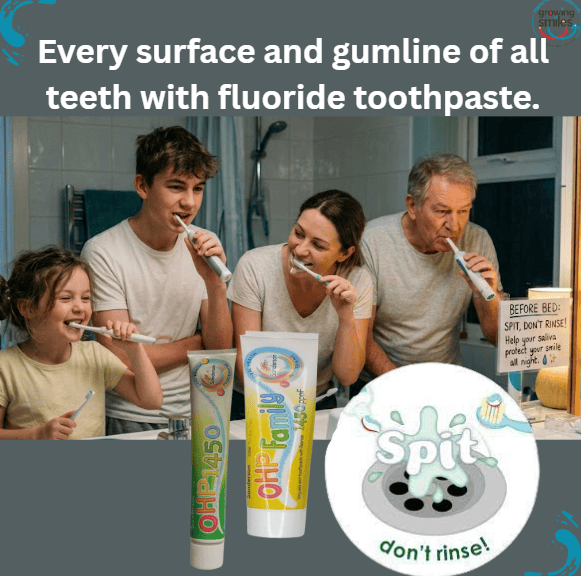
After brushing, encourage your child to spit out the excess toothpaste but not rinse with water. Rinsing washes away the fluoride left on the teeth and reduces its preventive effect.
Aim to clean all the surfaces and along the gumline of all the teeth. Aim to spend at least 2 minutes toothbrushing
Being able to hold a toothbrush doesn’t mean they can clean every surface properly!
🏃♀️ Back to school also means back to sport
New school year. New PE kit. New trainers. New sports clubs.
If your child takes part in a contact sport where there’s a risk of injury to the mouth, think about a properly fitting mouthguard. Mouthguards can help protect the teeth and mouth from sporting injuries, and professional advice can help you choose an appropriate one. This is particularly important for children whose mouths and teeth are still developing. If an accident does happen and a tooth is damaged, knocked out or broken, seek dental advice promptly.
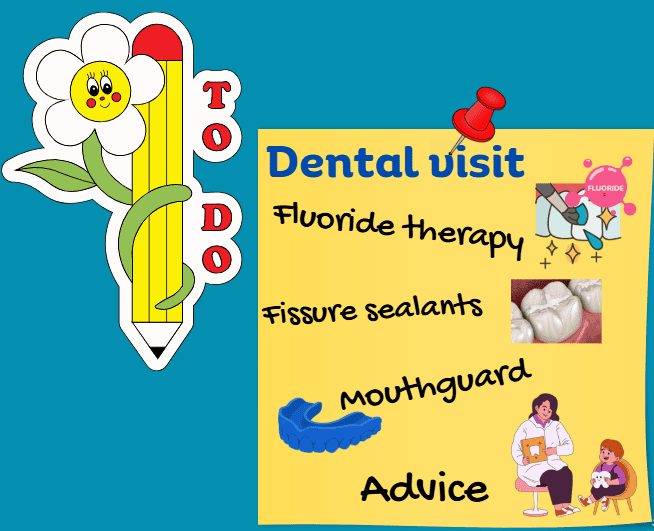
Regular dental visit are important for everyone. It’s not just about fixing problems – it’s picking up changes, identifying risks early and getting advice and preventive care. A professionally fitted mouthguard protects your child’s growing smile. Talk to your dental team.
Water is the sporting drink of choice.
Sports and energy drinks are not necessary for most children’s everyday sporting activities and can be high in sugar and/or acidic. Plain water is best for hydrating most people.
💊 Does your child take regular medication?
If your child takes medication regularly, particularly liquid or chewable medicines, ask your pharmacist, GP or dental team whether a sugar-free alternative is available. Medicines containing sugar can contribute to the frequency of sugar attacks and may increase the risk of cavities, particularly when taken regularly. Inhalers can cause a dry mouth which can increase gum inflammation and risk of cavities.
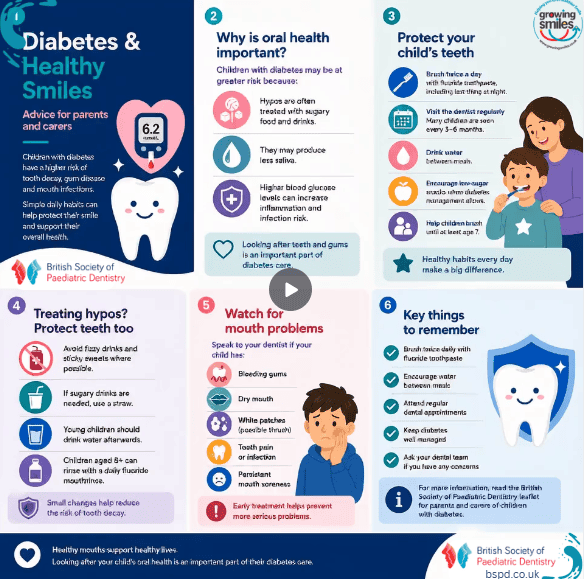
Don’t stop or change prescribed medication without professional advice. More about the connection between your mouth and your body here.
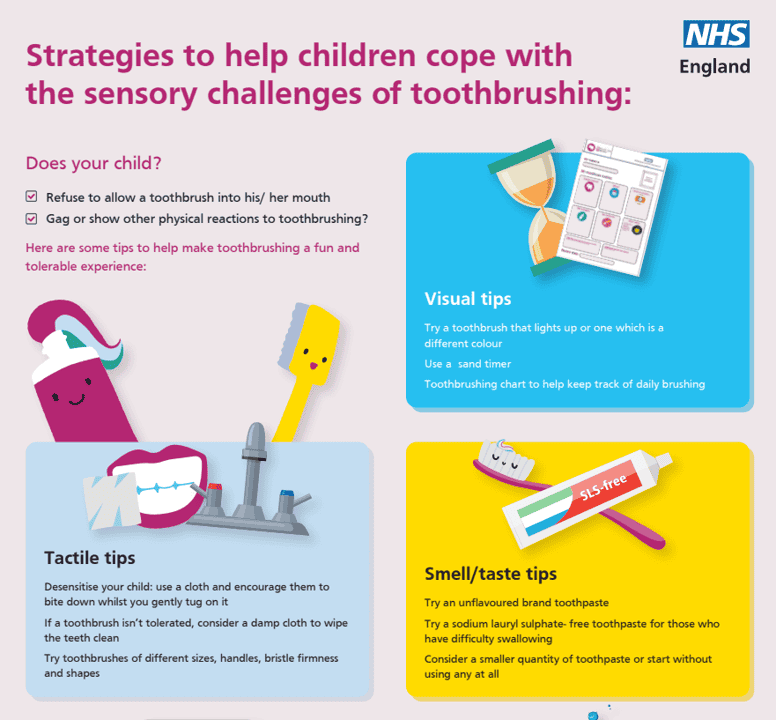
Going back to school isn’t the same for every child. If your child has extra needs that may well extend to caring for their smile.
You will find useful links to help here
🎒 The Growing Smiles back-to-school checklist
Before the school gates open, why not check:
FOOD
☐ Breakfast before school
☐ Nutritious lunch
☐ Sugar-free between-meal snacks
☐ Fresh fruit and vegetables
☐ Dried fruit kept to mealtimes
☐ Sugary foods mealtimes
DRINKS
☐ Water bottle
☐ Plain milk where appropriate
☐ No sugary drinks in the everyday lunchbox
☐ Fruit juice/smoothies limited and kept to mealtimes
TEETH
☐ Fluoride toothpaste- 1350ppm
☐ Brush twice a day
☐ Brush last thing at night
☐ Spit — don’t rinse with water
☐ Help/supervise brushing
SPORT
☐ Mouthguard if contact sport
☐ Water bottle ready
☐ Know what to do if an accident happens involving the mouth
❤️ Back to school. Back to healthy habits.
September doesn’t need to mean a complete lifestyle overhaul. We are big fans of making the best option the easy option so keep it simple –
Water instead of sugary drinks.
Meals instead of grazing.
Fresh fruit instead of dried fruit between meals.
Brush twice a day with fluoride toothpaste.
Spit, don’t rinse with water.
Protect teeth during contact sport.
Small changes, repeated consistently, make a big difference to growing smiles.
We believe that everyone can have a healthier smile for life because oral health isn’t just about what happens in the dental chair. It’s about what happens every day at home, at school, at work, at play and everywhere in between.
Eat Well. Clean Well. Be Well.
And whatever the new school year brings… Keep smiling! 😊
About Growing Smiles
Growing Smiles is not a dental practice. We complement regular dental care through oral health coaching, practical advice and carefully selected oral health products that will work for you. One size does not fit all.
Our aim is simple: Helping you, help yourself have a healthier smile for the life you and your family lead.
If you would like personalised support with your family’s oral health routines, food and drink choices or home care, Growing Smiles can help you identify practical changes that fit into real life. Follow us on social media, book a coaching session or contact us. Talking Teeth Thursday is a live Q & A with oral health coach LeighGS on Facebook at 7pm.