
What’s in a name ?Not sure what might hide as a free sugar? Check the British Heart Foundations infographic…soo many options! We tend to say watch out for anything that ends in -ose as an added ingredient e.g. sucrose . It’s a good starting point.
More about sugar and oral health here.
We are often asked about how to reduce sugar intake. Sometimes for oral and dental health, sometimes for weight loss, overall health or wellbeing. Whatever the reason it’s a challenge. Some are happy to switch to sugar replacements like erythritol or xylitol. Keeping the sweet taste without the negative impact to teeth, gums, overall health and wellbeing. Others want to avoid sugar and its replacements in their efforts to cut down and ultimately quit sugar.
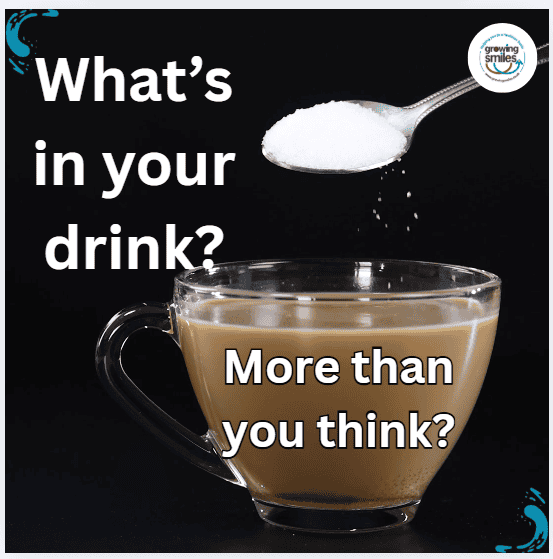
For many in the UK, especially older people, tea and coffee contribute a large part of total daily hydration. Plain water is a healthy, cheap and generally an easily accessible drink to hydrate. Other drinks can count towards the Eatwell guides recommended intake of 6-8 glasses/cups per day. Low-fat milk and sugar-free drinks, including tea and coffee, all count as part of your daily intake. What to do if you are the one in three who add sugar to your hot drinks?
Where to start?
Cold turkey to quit is one route or swapping for a non sugar replacement. We know some who drink black tea who have opted for honey but that is trading one free sugar in for another. Honey, nectar, syrup etc are all classified as free sugars and should be limited for both dental and overall health.
Here is one solution we’ve come up with in a route to cutting down which makes it easier to cut out completely from your hot drink.
Try a smaller teaspoon!
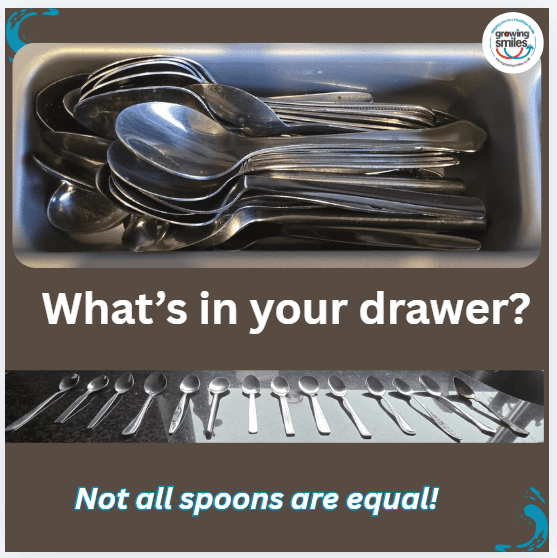
Not all teaspoons are equal.
When we started on this solution we very quickly disappeared down a rabbit hole of how much sugar was in a teaspoon! Bear with us:)
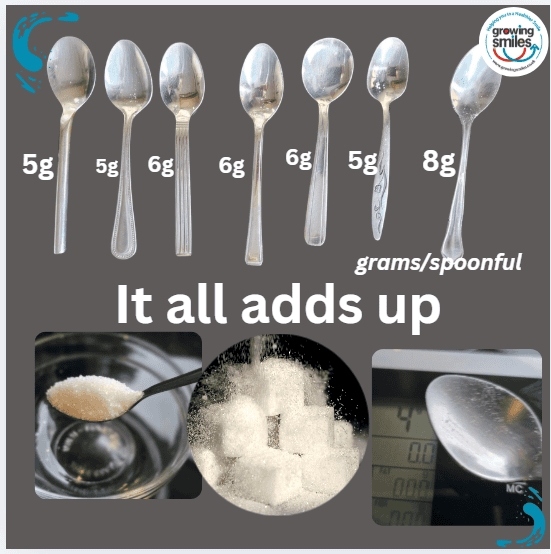
In the UK the maximum recommended daily intake of “free sugars” for adults and children over 11 is 30g. That’s approximately 7 teaspoons of sugar which is based on one LEVEL teaspoon = 4g of sugar (16 calories).
Who levels a teaspoon?🤔
That was our first thought! None of the Growing Smiles team admitted to that unless they were cooking or baking! So off we went down that rabbit hole!
Just how much sugar were some folk adding to their tea or coffee? One of the team raised how older people appear to have endless cups of tea/coffee. Whether living at home or in supported care/nursing homes there can be a habit of going from one cuppa to the next. We’ll circle back to this.
We are a nation of hot drink consumers, with UK tea and coffee consumption averaging 4 cups per person per day. Let’s expand that thought. When do we have those cuppas? At mealtimes? Between meals? How often have you arrived to visit someone, been at a meeting or some other gathering and the first you are offered a seat and a tea or coffee? Not always in that order!
Do you have a cuppa at the end of a meal? Between meals, watching the TV?
If you add sugar to your hot drink WHEN you have it and HOW LONG you take to drink it counts!
Every time you have sugar there is potential for tooth surfaces to decay. The longer its in contact with tooth surfaces (enamel and dentine) the more likely cavities will develop. Also think about those extra calories – they all add up.
Adding 1 LEVEL 4g teaspoon sugar to each cup adds 16g sugar a day (over half the recommended daily total) equating to around 64 calories/day.
- 23000 calories a year.
(Rough weight gain > 3kg/65lbs)
We decided to take a closer look at teaspoons! Nearly half the teaspoons in our drawer held twice the recommended 4g! Yes, we did weigh it all out!
What if you take milk and 2 sugars in your tea/coffee? You can do the math.
The more sugar we put in our mouths and the longer it is contact with our teeth the worse the outcome. Not much to smile about considering it really is the worse case scenario when those cuppas are often between meals and/or before bed. Coffee/tea on the go? In coffee shops or from a machine? Check the sugar content. We got a shock when we looked at coffee pods and realised ‘flat white’ was made with sugar. One brand ingredients – whole MILK powder(71,3%), soluble coffee (13,7%), sugar (12,8%); while another well known pod brand actually had more sugar than coffee – Cream from MILK (29%), sugar, roast and ground coffee (25%)! Latte? Mocha? Cappuccino? Maybe look a little closer at ingredients.
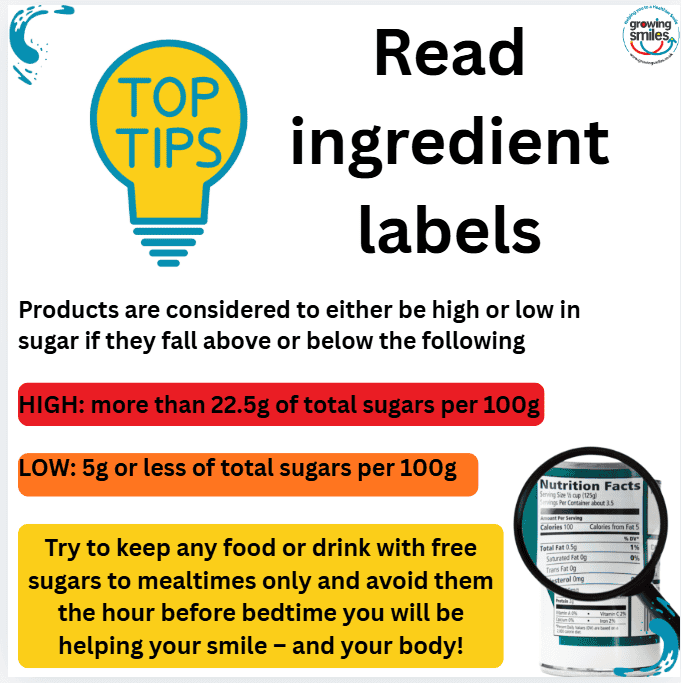
TIP – read ingredient labels. The closer to the beginning of the ingredients list sugar appears the more sugar in the product.
FREE sugars are those added to food and drinks by the manufacturer, the chef/cook or yourself (the consumer), AS WELL as sugars that are naturally present in honey, syrups and fruit juices. It DOES NOT include sugars that are found naturally in whole FRESH fruit and vegetables and those naturally present in milk and milk products. Learn more about understanding food labels here.
Remember we mentioned older people and endless cups of tea/coffee. People over 60 drink more tea and coffee.
We often talk about what goes ‘into the mouth and what goes on inside the mouth’ as key to oral health. In the case of older people, many have dry mouth issues related to aging and/or medication. This along with gum recession exposing softer root surfaces, deteriorating dexterity, sight issues, cognitive impairment etc can lead to the perfect storm for deteriorating oral health. Poor saliva flow. Increased plaque biofilm. Poor oral hygiene. Lots of aging dental work e.g. fillings, dentures etc that hold plaque around teeth. Root surfaces exposed. All contribute to increased risk of tooth/root decay and gum disease. This is not exclusive to older folk. Keep track of how many hot drinks you have over the next few days. What are you drinking? Instant with milk? Coffee machine/pods? Coffee shop or cafe? How are you drinking it? Mealtimes? Sipping over time? When are you drinking it? Before bedtime? Added sugar either by your own hand or those making it? All play into risk of disease.
Let’s go back to our drawer of teaspoons!
In our drawer we found teaspoons held from 3g to 8g sugar – quite a difference in the total amount of sugar added to your drink. Do you have a favourite spoon you keep going back to? Big? Small?
One option to cut down on how much sugar you are having, if you don’t want to go the sugar replacement route?
Try downsizing your spoon.
It’s a good step towards weaning yourself off completely. Think of it the way a tobacco smoker might opt for vaping as a route to quiting completely. KEep you eye on the end goal.
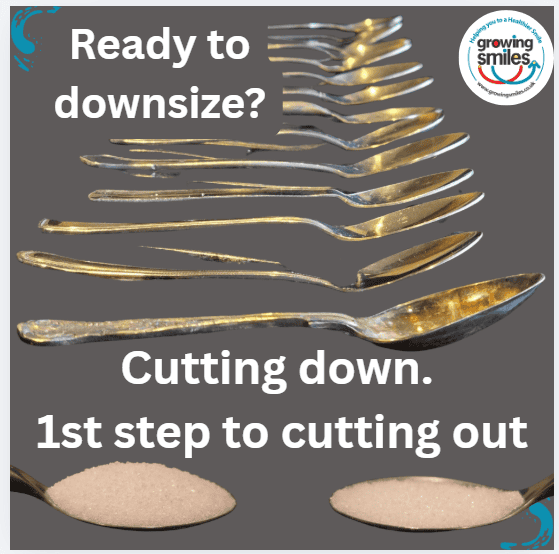
Gradually over a week or two decrease the amount you are adding. Maybe level off your regular spoon first then start gradually downsizing.
Then level off the smallest spoon.
Before you know it, you won’t be looking for either teaspoon nor sugar.
A reset worth trying? We think so.
Great for your smile, your waistline, overall health and wellbeing.
Growing Smiles is here to help you, help yourself have a healthier smile for life. For personal advice book a coaching session with oral health coach LeighGS here.