Mind Your Mouth – you’re worth it!
Here you will find the basic evidence-based oral health advice helping you, help yourself have a healthier smile for life.
What are the most important things you can do for a healthy mouth?
We like to keep it simple so avoid snacking between meals, keep your mouth plaque free and look after your over all health and wellbeing. Below we lay out things to consider and offer solutions to improve your oral health.
Eat Well
Sugar
Drinks
Snacks
Acid/tooth wear
Clean Well
Brush thoroughly
Fluoride toothpaste
Spit don’t rinse
Clean between teeth
Be Well
General health & wellbeing
Tobacco
Alcohol
Professional care
10 things you can do
For most people, the foundations of good oral health are fairly simple*
- Brush your teeth twice a day with fluoride toothpaste.
- Brush last thing at night and one other time each day.
- Spit toothpaste out after brushing but don’t rinse your mouth with water.
- Clean between your teeth every day.
- Cut down on how much and how often you eat and drink sugar. Avoid these before sleeping.
- Eat more fruit and vegetables and drink water to hydrate.
- Limit alcohol keeping to low risk consumption.
- Avoid smoking, tobacco, nicotine products and recreational drugs.
- Keep acidic food and drink to mealtimes only and avoid before bedtime.
- Be mouth aware. Know your risks and check your mouth for signs of mouth cancer regularly.
(These messages reflect Delivering better oral health: an evidence-based toolkit for prevention, to support dental teams improving oral and overall health.) The information here is general. Contact us to individual advice based on your personal situation.
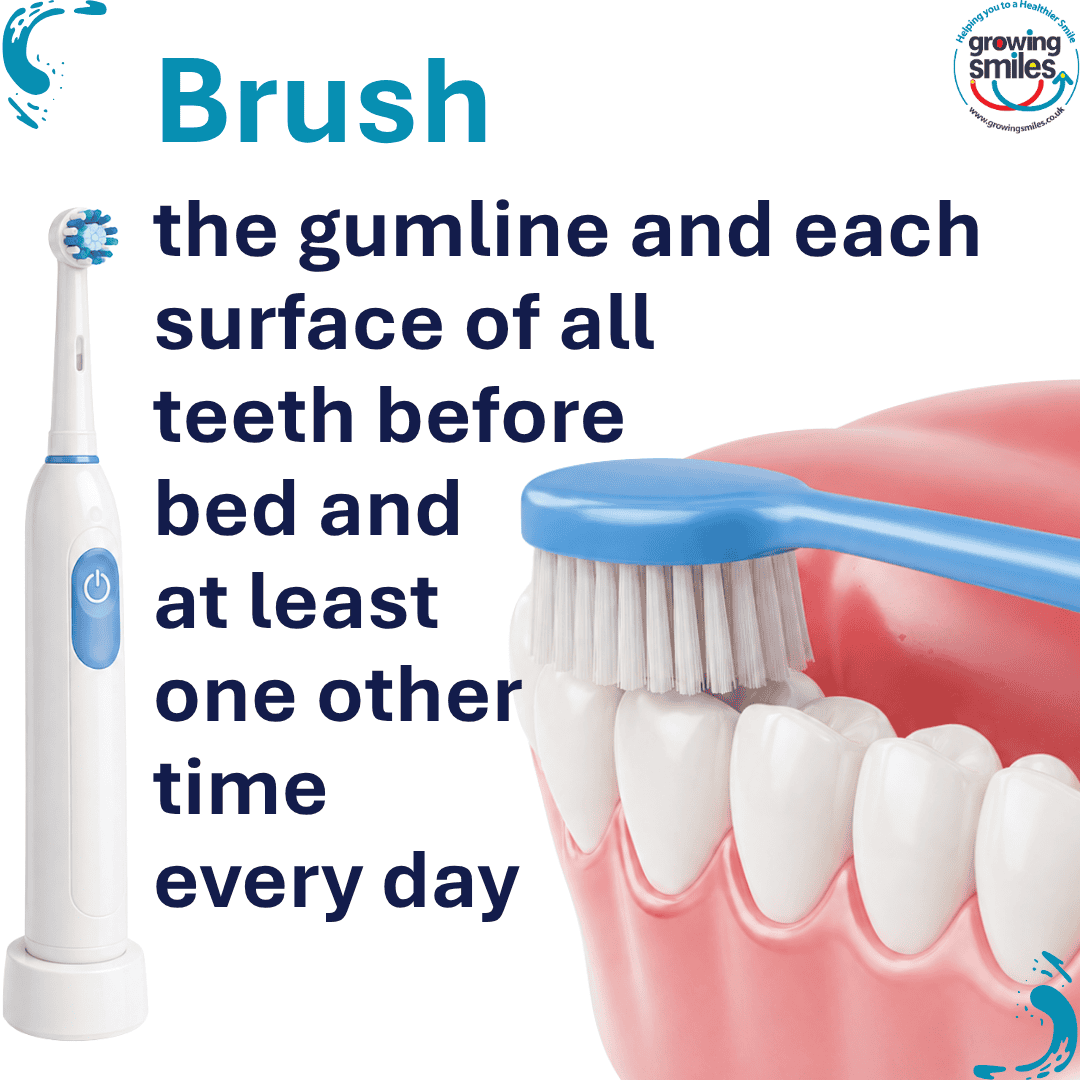
Brush the gumline and each surface of all teeth before bed and at least one other time every day.

Use fluoride toothpaste. Spit out after brushing but don’t rinse with water to get maximum benefit from ingredients.
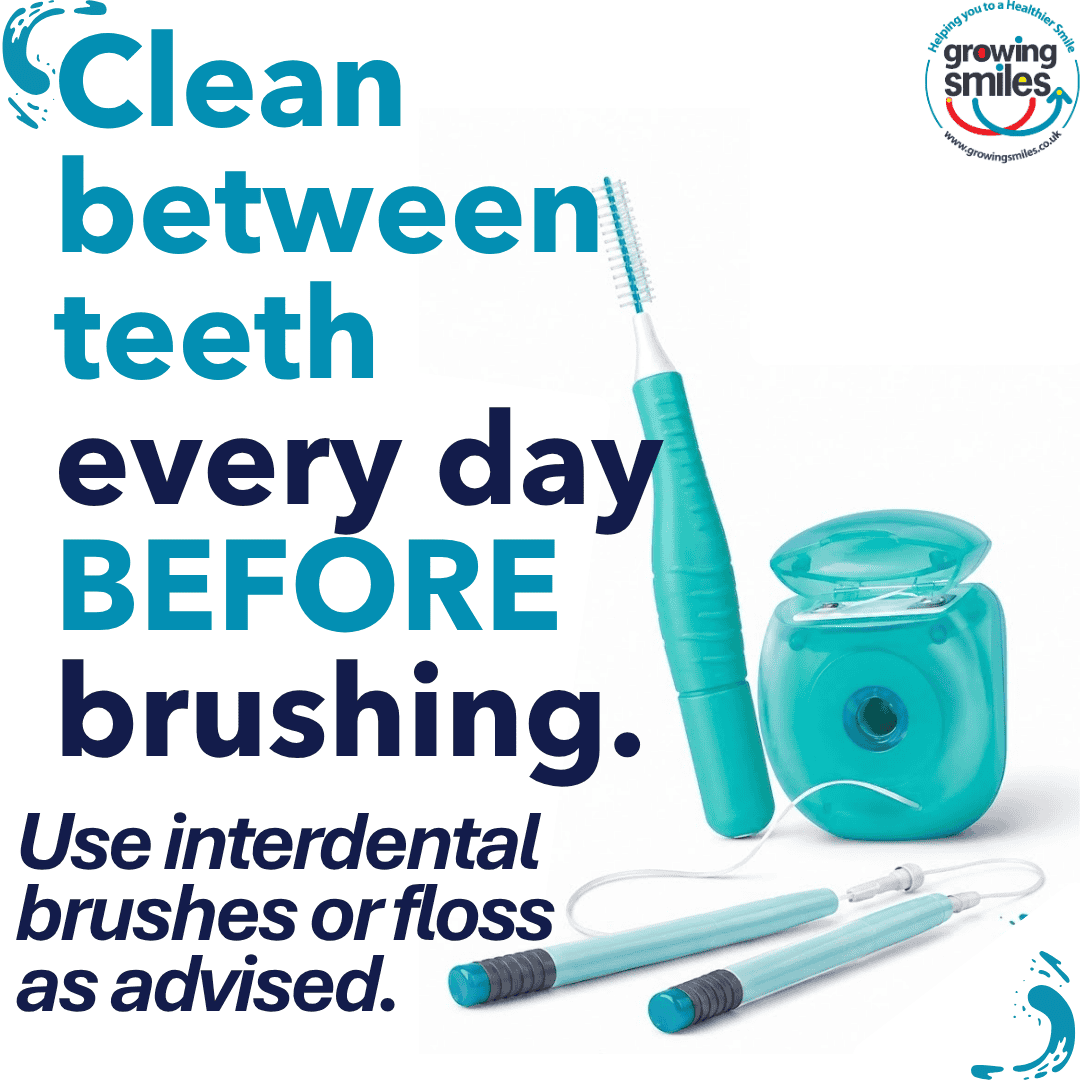
Clean between teeth every day before brushing. Use interdental brushes or floss as advised.

Cut down how much and how often you have sugar. Don’t forget about drinks, medications and supplements.
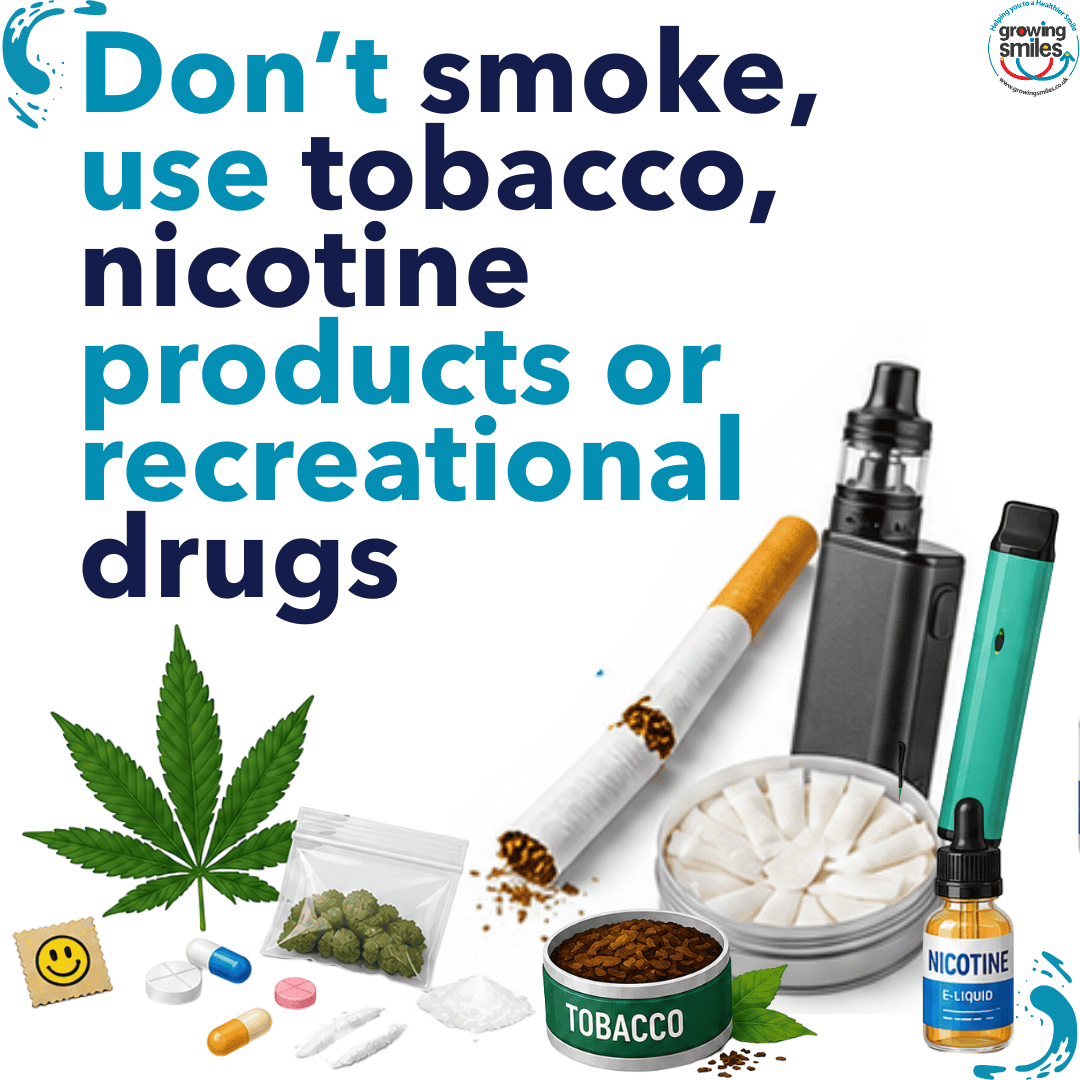
Don’t smoke, use tobacco or nicotine products or recreational drugs.
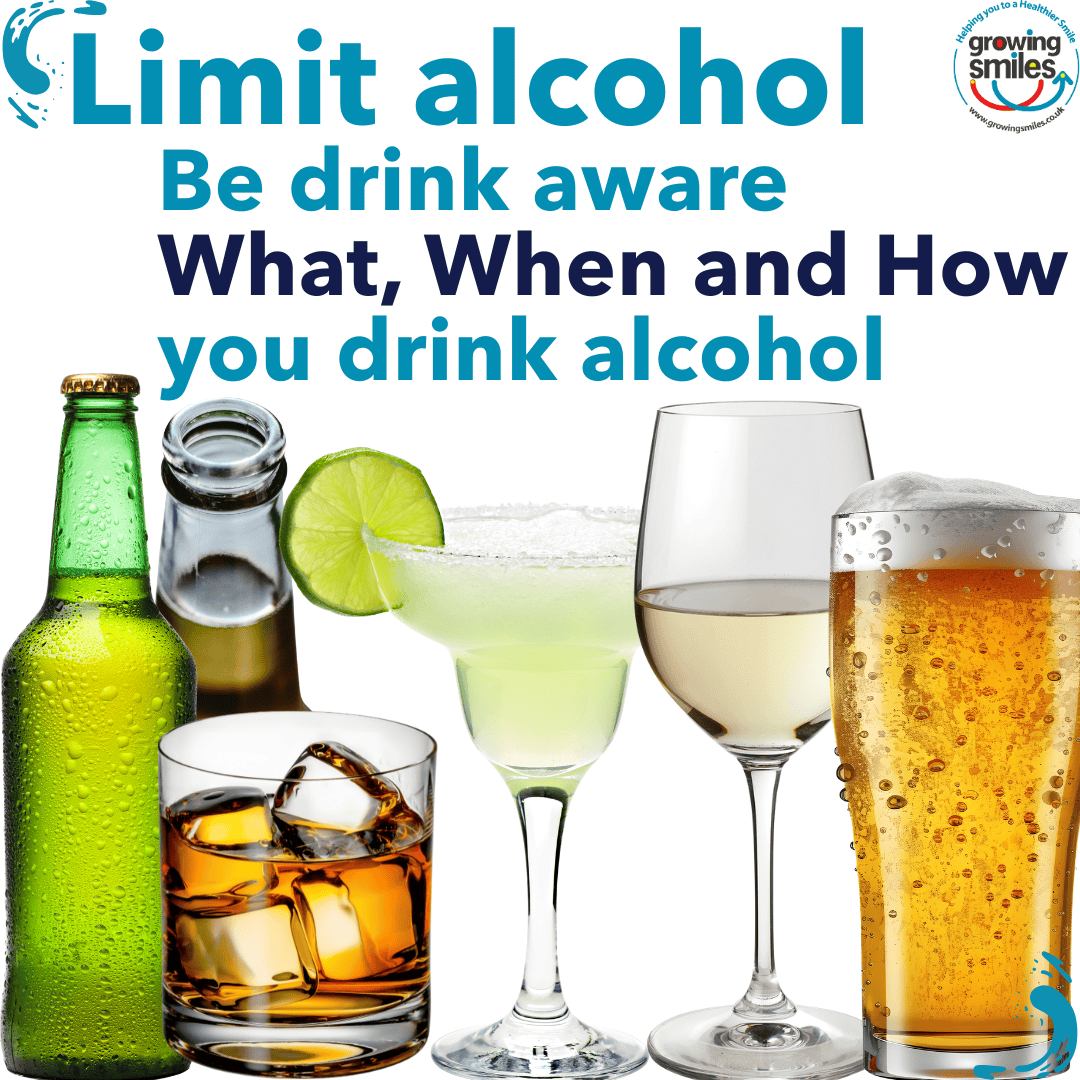
Any alcohol comes with a risk to oral and overall health and well being. Limit intake and be mouth aware.

Eat more fruit and vegetables every day and drink water to hydrate.
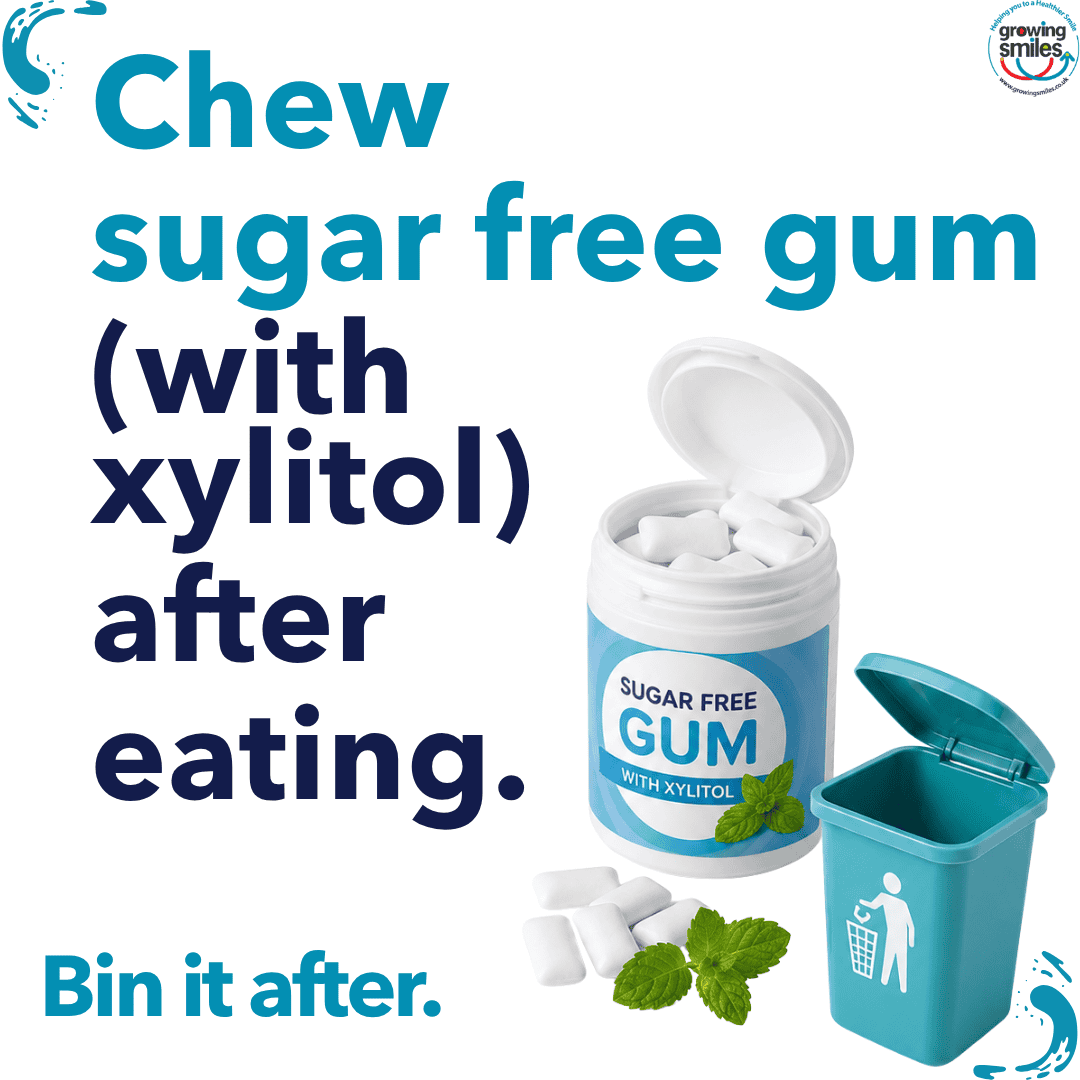
Chewing sugar free gum with xylitol helps stimulate saliva flow.
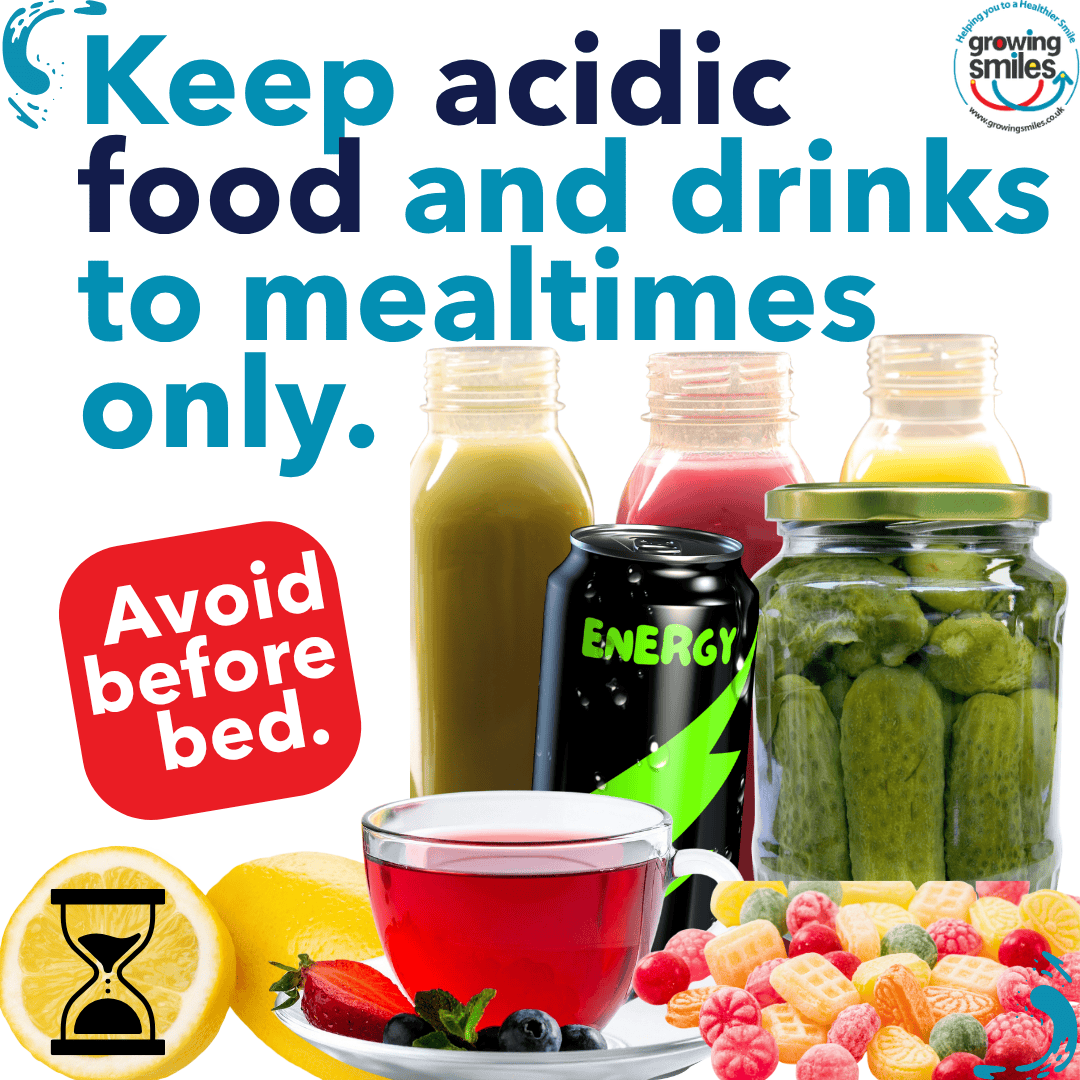
Keep acidic food and drinks to mealtimes only
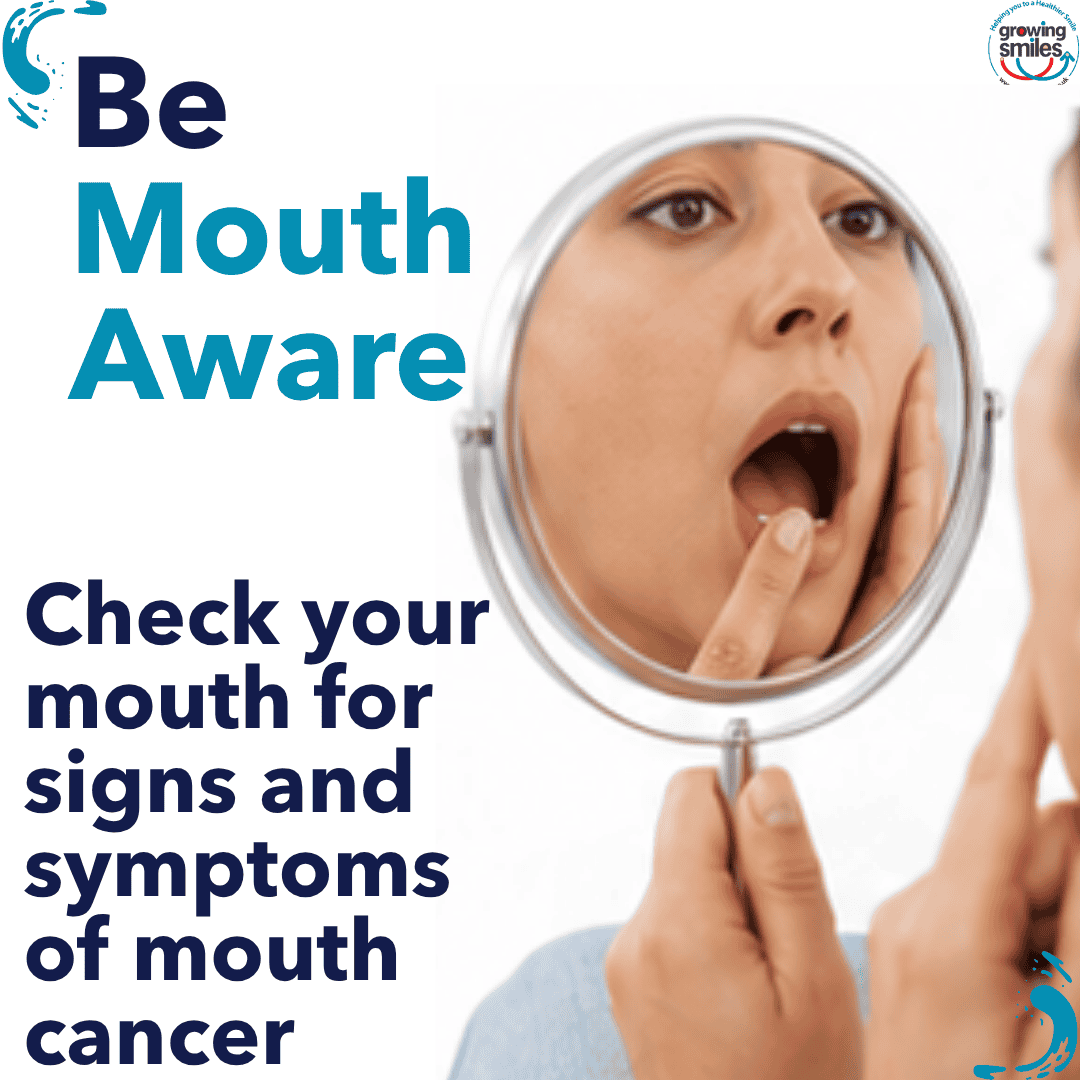
Check your mouth for signs and symptoms of mouth cancer.
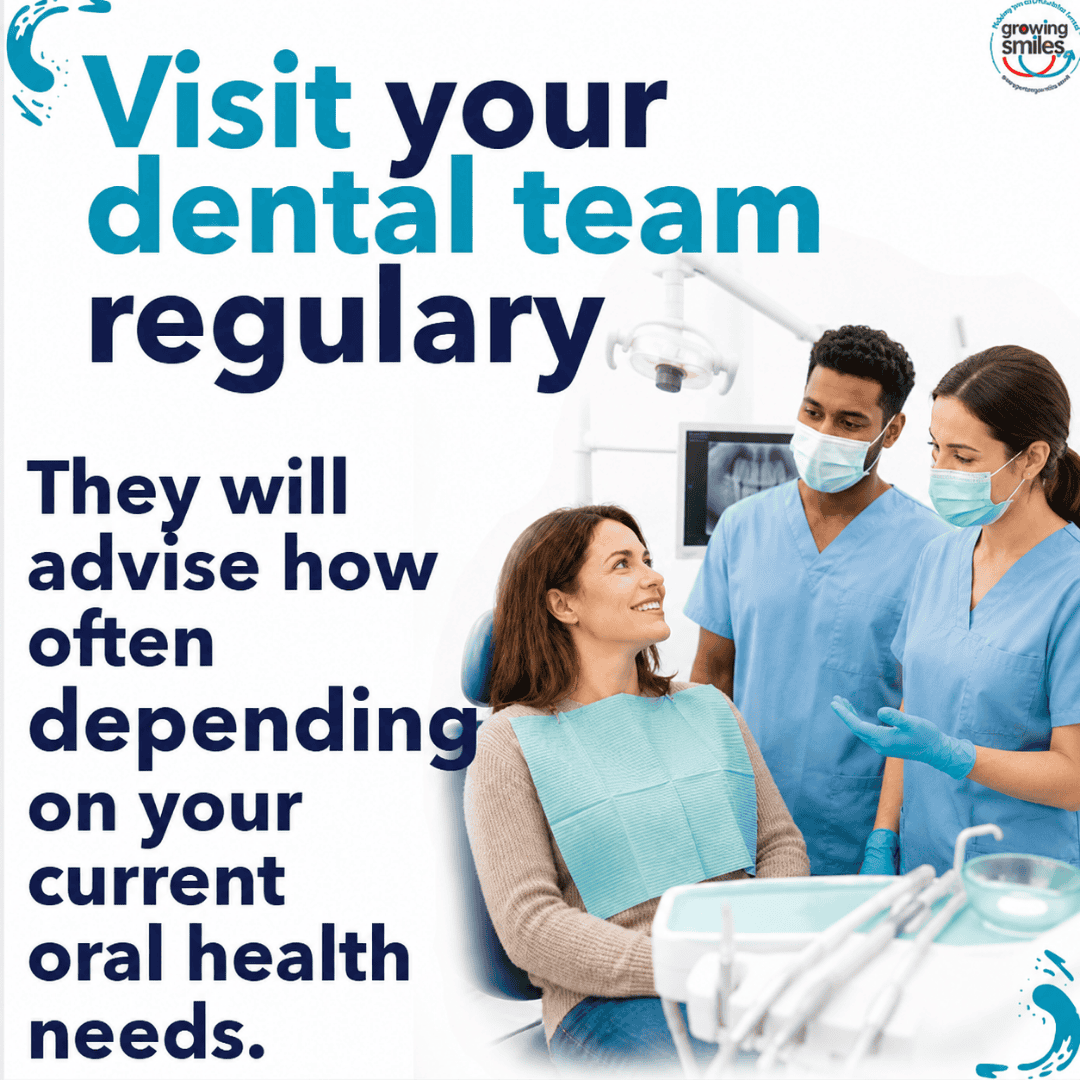
Visit your dental team regularly. This can vary from 3 monthly to 2 years depending on your risk and needs.
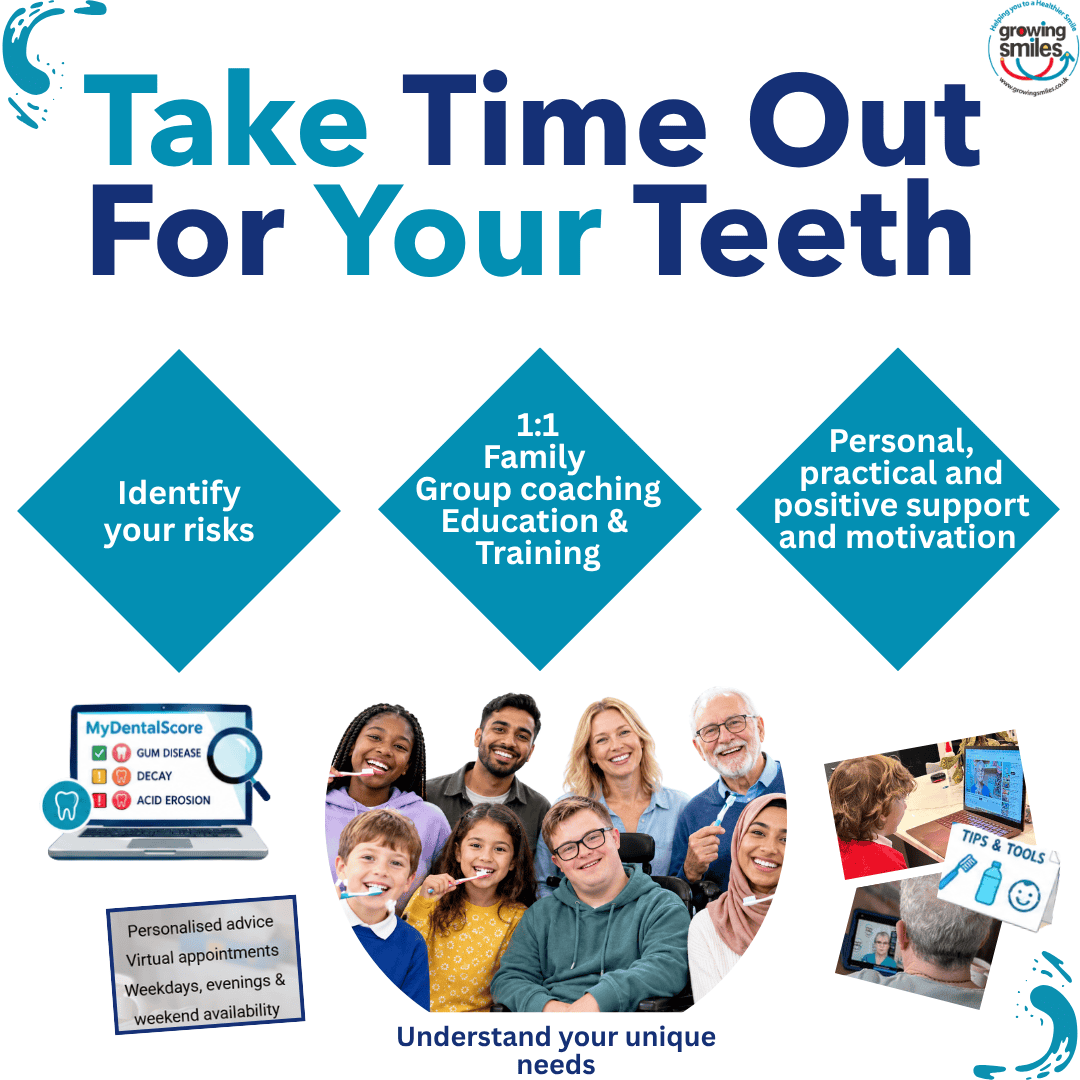
Time out of teeth is a personal lifestyle coaching service to support dental visits. Book online.
Looking after your mouth is about more than having a nice smile and fresh breath.
Your mouth is part of your body with many links to your overall health and wellbeing. Its a two way street – a healthy mouth supports a healthy body and vice versa. The World Dental Federation define oral health as multi-faceted and includes the ability to speak, smile, smell, taste, touch, chew, swallow and convey a range of emotions through facial expressions with confidence and without pain, discomfort and disease of the head, face, and oral cavity. Think about how your teeth, gums, tongue, cheeks and saliva function – how would poor oral health affect you?
The ‘influencers’ to a healthy smile
Many things that affect our mouths are influenced by what we do everyday. At Growing Smiles we aim to help you identify your risks and support you towards improving your oral health. We believe in tailoring our advice to be Personal (you are unique), Practical (support you making realistic changes that fit into your life), and Positive (no nagging or blame!). What each of us need to do, from time spent cleaning to time in a dental chair, will be different. No one size fits all – we are all different with individual risks, needs and wants which may well change throughout life.
At Growing Smiles, we believe everyone can have a healthy smile for life. The foundations to a healthy smile are in our own hands. What we do every day really does matter – not just for oral health but for overall health and wellbeing, hence our simple approach – Eat Well. Clean Well. Be Well.
Eat Well – what goes into your mouth
What you eat and drink affects your mouth as well as your body. Eating a varied, balanced diet supports general health and oral health. The frequency and amount of sugary foods and drinks are important to prevent tooth decay with dietary acids contributing to acid erosion and tooth wear. While our primary focus is oral health, improving our diets – food and drink, will benefit other aspects of health and wellbeing e.g. weight control, inflammation.
Think about how often your teeth are exposed to sugar and acids
It’s not just the amount of sugar you consume but also how often, and when, that affect your risk of poor oral health. Its a balance between sugar acid attacks causing demineralisation v saliva promoting remineralisation.
Every time we consume sugary foods or drinks, the bacteria in dental plaque use the sugars to produce acids. Repeated sugar acid attacks increase the risk of tooth decay. No matter your age aim to:
- Keep sugary foods and drinks to mealtimes where possible and avoid them before bedtime.
- Avoid frequent sugary snacks and drinks between meals.
- Choose water or plain milk between meals.
- Check food and drink labels to identify free sugars.
- Think about what you are eating and drinking throughout the day – not just at mealtimes.
- Be careful with drinks, including drinks that may appear to be a healthier choice
Think about frequency (how often), portion size (how much), and timing (when and how long it remains in the mouth) of sugars and acids in your overall diet. While we tend to think of sweets, biscuits and fizzy drinks as something we control there are many other less obvious sugars e.g. high calorie supplements. In some cases these are necessary for overall health and wellbeing and should not be stopped. In these cases extra care is required to limit the impact they have on your mouth.
Don’t think of food as good or bad. We like to think in terms of food/drink in terms of ‘anytime’ ‘sometime’ or mealtimes only. Think more about your overall nutrition, choices of what and when you eat/drink certain things. ‘Treats’ should be just that – a treat, not an everyday habit. Ask yourself can you reduce negative consequences?
Read more: Diet and Oral Health and Sugar, Oral Health and Alternatives.
Choose drinks carefully
Water is a simple, tooth-friendly choice between meals. Water (unflavoured) and plain milk are the safest choices for teeth. Avoid adding sugar to hot drinks and consider that herbal and fruit teas as highly acidic. Many pre made and cafe drinks are high in sugar while one of the biggest drivers of tooth decay in children and young people is frequent fizzy and sports drinks.
Frequent consumption of sugary drinks increases the risk of tooth decay. Acidic drinks contribute to tooth wear – this includes drinks that may contain little or no sugar e.g. diet drinks.
- Don’t think –
- “How much sugar is in this drink?”
- but also
- “How often am I drinking it?”
- “How long is it in my mouth?
- then
- “Is it acidic?”
Try to avoid constant sipping throughout the day. This includes coffee shop and bottled coffees (often high in sugar), fruit teas (acidic), smoothies, juices and sports drinks.
If you enjoy acidic drinks, make it cold! The lower temperature slows the erosive tooth wear (think chilled juice v hot fruit tea). Drink in one go, with a meal is generally better than sipping over a long period. Use a reusable straw to help limit tooth surface contact.
Read more: Acids, Tooth Wear and Your Mouth
Clean Well – How well you look after your mouth
Your mouth should be cleaned regularly to disrupt the dental plaque biofilm that builds up every day. It should be part of your personal hygiene routine.
Why? It is the instigator of many problems in your mouth.
- Plaque biofilm is a sticky film of bacteria that forms on teeth and other surfaces in the mouth e.g. denture, dental implants etc.
- Plaque starts to develop immediately after cleaning and matures over time.
- If plaque isn’t removed regularly and effectively, it can contribute to tooth decay, gum disease and bad breath.
Your body responds to the bacterial plaque biofilm in your mouth. We all know of people who never seem to have dental problems in spite of seemingly not looking after their mouth, while others put in huge effort and still end up with disease. Many factors contribute to this e.g. shape of teeth, personal care, saliva flow but also the body’s response to the bacteria in your mouth at that time. You may have heard about inflammation in the mouth being related to for example, diabetes and heart disease? This is the mouth body connection. Keep in mind that your body’s response can change throughout life, so while your actions as a 10 year old kept your mouth healthy, it may no longer be enough in later life.
Take time to clean your teeth and gums effectively at least twice a day
Clean your teeth:
- last thing at night
- and at least one other time every day
- using fluoride toothpaste (look for 1350 – 1500ppm fluoride).
Take time to brush all the surfaces of your teeth – outside, inside, biting surface and along the gumline of all teeth. Focus on the task in hand – watch what you are doing – it takes longer than you think to clean thoroughly! Scrubbing harder doesn’t mean cleaner! Hard scrubbing with an abrasive toothpaste or powder is more likely to cause damage to teeth and gums.
After brushing:
Spit out toothpaste – don’t rinse with water.
- Rinsing immediately after brushing washes away much of the concentrated fluoride left behind by your toothpaste. If a dental professional has advised use of a mouth rinse, follow their directions for use – these will be personalised to your needs and risk.
Want to improve your brushing?
More about toothbrushing – How to clean your teeth like a pro
Find products the professionals recommend – toothbrushes and products for cleaning between teeth where your toothbrush can’t reach.
Use fluoride toothpaste
- Fluoride helps protect teeth from decay, tooth wear and plaque buildup.
- Brushing twice a day with fluoride toothpaste is one of the most important things you can do to protect your teeth and have a healthy smile.
- The amount and strength of fluoride toothpaste that is right for you depends on your age and individual risk.
- Some people may benefit from additional or higher-fluoride products following advice from their dental team.
Not sure which toothpaste is right for you?
Read our Toothpaste Guide.
Find toothpastes the professionals recommend
Clean between your teeth every day
Your toothbrush cannot effectively reach every tooth surface to disrupt and remove plaque biofilm. This means it can’t reach between your teeth and using mouthwash isn’t an alternative to mechanical plaque removal with some form of interdental cleaning aid.
Cleaning between your teeth every day is an important part of a healthy mouth.
What you use depends on the shape of your teeth, your gums, if you have dental restorations e.g. fillings, crowns, bridges or dental implants. You may consider:
- interdental brushes (the gold standard if you have the space)
- floss
- water flosser
- another method recommended by your dental team or Growing Smiles coach.
The best method for you is one that fits your mouth and that you can use effectively and consistently.
GS top tip: Clean between your teeth before brushing or at a different time of day.
Your dental team or Growing Smiles coach can help you choose the most appropriate size and method. One size does not fit all! Sometimes multiple sizes or products may be required.
More on Cleaning Between Teeth – Flossing and Interdental Cleaning.
Find products the professionals recommend – interdental brushes, floss and water flossers.
Be Well – how your mouth and body are connected
Your mouth doesn’t exist in isolation. Think of your mouth as the front door to the rest of your body. Many things that affect general health and wellbeing also affect your mouth. Oral health is integral to overall health and wellbeing so think about what goes into your mouth and what goes on inside your mouth and how they impact your oral health, general health and wellbeing.
Common risk factors for poor oral health and poor general health include diet, smoking, tobacco and alcohol use, access to health care.
More on General health and oral health.
Don’t smoke or use tobacco.
Why?
- Smoking and tobacco use can have serious effects on your mouth, oral and general health.
- They are major risk factors for gum disease and mouth cancer. Smoking can also affect healing after dental treatment.
E-cigarettes, vapes and nicotine pouches are not without risk. If you smoke – vape. If you don’t smoke, don’t vape.
- If you smoke, stopping is one of the best things you can do for your overall health and your smile.
- If you want to stop smoking, speak to your GP, pharmacist, dental team or a recognised stop-smoking service for support.
More – Smoking, Tobacco, E-Cigarettes and Oral Health
Keep alcohol within low-risk guidelines
- The current UK advice is to avoid regularly drinking more than 14 units of alcohol a week – this is NOT 14 drinks!
- Alcohol can affect your oral health as well as your general health.
- Alcohol increases your risk of mouth cancer – especially in combination with smoking. It also is related to an increase in tooth decay, gum disease, bad breath, staining, tooth wear and trauma.
- Some alcoholic drinks contain sugar and/or are acidic which can increase the risk of tooth decay and acid erosion.
- Alcohol can contribute to dry mouth.
- If you drink alcohol, spread your drinking over three or more days rather than drinking a lot in one session (binge drinking).
More Alcohol and Oral Health
Check your mouth regularly
Know what is your normal in your mouth so that you can recognise changes. A change doesn’t mean its bad news, but you won’t notice changes if you don’t recognise what’s normal for you. Everyone over 16 should check their mouth for signs of mouth cancer at least once a month.
Know your risk. Recognise change. Take action.
Look inside your mouth regularly and be aware of anything that is unusual or doesn’t heal within 3 weeks.
This might include:
- a mouth ulcer
- an unusual lump or swelling
- a red or white patch
- unexplained bleeding
- persistent pain
- changes in the way something looks or feels
- unexplained changes to your voice
Most mouth changes will not be cancer BUT persistent or unusual changes should be checked especially if you are at high risk of cancer.
- If you are concerned about something in your mouth, speak to your dentist, doctor or another appropriate healthcare professional.
- Follow @growingsmilesuk on social media for a monthly reminder to self check
More Mouth Cancer – signs, symptoms and checking your mouth
Your mouth is more than the sum of your teeth
Your mouth helps you:
- eat and drink
- chew
- swallow
- speak
- communicate
- express emotion
- smile
- connect with other people.
Poor oral health can cause pain and discomfort and may affect eating, sleeping, speaking, confidence, school, work, your overall health, wellbeing and everyday life. Many oral health issues are a reflection of overall health e.g. bleeding or ulcers which may related to poor nutrition, stress or other conditions.
For some people, oral health problems can also make managing other aspects of health more difficult. For example, you have sensitive teeth which impacts food and drink choices with potential depleted nutrition. Growing Smiles is here to help find solutions to help you look after your oral health. Contact us
Look after your mouth throughout life
Your mouth changes as you grow, work, study, have family, get older and experience changes in your environment, general health and the ability to look after yourself. As life changes your oral health care needs may change.
That’s why Growing Smiles looks at oral health across the life course. From pregnancy, your baby’s first tooth, through childhood, adolescence, adulthood and later life, there are different things to think about at different stages throughout life.
More about different stages of life and your oral health – The Life Cycle of Your Smile
You can find advice for different stages of life, including:
- pregnancy
- babies and teething
- young children
- school-aged children
- teenagers
- young adults
- working-age adults
- midlife
- older adults
- later life
- palliative and end-of-life mouth care
Your mouth matters from conception to death – and every stage along the way.
When should I see my dental team?
There isn’t one appointment schedule that is right for everyone. Your dental team will recommend how often you need to attend based on your individual oral health risk and needs. Keep in mind that this can change throughout life as your risks and needs change. Some people will need to be monitored and require supportive dental care every three months while others may go as long as 2 years between dental visits.
Your dental care is more than visiting a dentist – it is a team, with you as the key player. You will likely come into contact and receive care from a variety of dental professionals – not unlike your health care team. Each member of the dental team has expertise to carry out their area of dentistry to the highest standard.
Don’t wait for your next routine appointment if you develop a problem. Acting sooner can save you pain, discomfort and money! The best dentistry is not needing anything other than monitoring and professional support. Prevention is always better than cure, and many of the things that contribute to poor oral health are managed by you but it important to contact your dental team if you have –
- persistent toothache
- swelling
- a broken or damaged tooth
- persistent bleeding
- ulcer, red or white patch in your mouth longer than 3 weeks
- trauma – what to do if a tooth is knocked out.
- problems with dentures or appliances
- any unusual or persistent changes in your mouth.
If you think you have a dental emergency, seek urgent dental care. The route to urgent dental in the UK is via your own dental practice. If you are not registered with a dental practice and have a dental emergency find out what to do here. Accidents happen so make sure you know what to do!
What you do every day is key to obtaining and maintaining oral health. Your dental team will help you prevent problems – not just fix them. They assess your oral health, monitor and help maintain your smile, supporting what you do every day.
Help your dental team provide the best care for your needs in a timely fashion by providing accurate, up to date information about yourself e.g.
- Medical history and medications – Not just prescribed but also over the counter and supplements. Tell them what you take, when and why – many medications are used for a variety of conditions – don’t assume they will know. Taking a written list can be helpful and update at every visit.
- Social and family history – e.g. Smoking, alcohol and recreational drug use. Occupation. Exercise routine. Do you play a sport or have a contact hobby? Is there a family history of gum disease, missing teeth etc?
- Dental history – past dental experience – positive or negative. Are you anxious about treatment? Had problems with anaesthetic – getting frozen, numbed up etc. Have you had dental treatment abroad? If so do you have any information e.g. x-rays that would be useful for your care.
- Disability – including sight and hearing loss. Do you were glasses or hearing aids? Do you need assistance to get in and out of dental chair?
The more complete the picture, the better able the team can manage your care.
More Your Dental and Oral Health Care Team.
Frequently asked questions about keeping your mouth healthy
Should I use mouthwash?
Mouthwash can have a place in some people’s oral-care routines, but it isn’t a substitute for doing the basics well –
- effective tooth brushing with fluoride toothpaste
- cleaning between your teeth
- making healthy food and drink choices.
- regular professional dental care
The right product depends on your individual needs – if you aren’t sure what’s right for you, contact us – we are here to help.
As a general rule is to use mouth wash at a different time to brushing. If you have been advised by a dental professional to use mouthwash follow their instructions.
More – Mouthwash and mouth rinses
What if I have a dry mouth?
- Saliva is important. It is your secret helper. We take it for granted until its not there!
- It helps lubricate your mouth, taste, swallow and speak as well as protecting teeth, gums and soft tissues in your mouth.
- A dry mouth can have many causes, including medicines, medical conditions, dehydration and some medical treatments e.g. chemotherapy.
- If you regularly have a dry mouth, don’t simply put up with it.
More Dry Mouth – Xerostomia
How often should I brush my teeth?
Brush your teeth at least twice a day with fluoride toothpaste – last thing at night and on one other occasion every day. Thorough plaque removal twice a day is better than quick brushing numerous times. This is because we tend to start brushing in the same place every time, so the first few teeth brushed get cleaned while some teeth are rarely reached. Starting to brush is a different place every time is one option or start brushing is the most difficult place to brush e.g. inside of the bottom teeth.
Should I rinse after brushing my teeth?
- No. Spit out toothpaste after brushing but don’t rinse with water. This helps leave fluoride and any other active ingredients e.g for sensitivity, on your teeth for longer.
Should I clean between my teeth every day?
Yes. Cleaning between your teeth helps remove plaque from areas that a toothbrush cannot reach.
Is fluoride toothpaste important?
- Yes. Fluoride helps protect teeth against decay, tooth wear and plaque biofilm build up. Using fluoride toothpaste is one of the most effective, evidence based actions you can take to keep your smile healthy.
Is sugar the only thing that causes tooth decay?
- No. Tooth decay is a complex disease involving bacterial plaque, dietary sugars, tooth susceptibility and time. High ultra processed food (UPF) intake has been related to increased risk of tooth decay. Sugar comes in many guises e.g. honey. Complex carbohydrates are broken down by enzymes in saliva into simple sugars. These feed the plaque bacteria and produce sugar acids which will contribute to cavity formation. Keep cavity prevention simple by reducing how much and how often you have free sugars.
Are sugar-free drinks always better for teeth?
- A drink can be low or free from sugar but still contribute to dental disease. i.e. if it’s acidic it can cause acid erosion tooth wear. Think about both sugar and acidity. Plain milk and water are best between meals and before bedtime.
Can I use mouthwash instead of flossing or brushing?
- Mouthwash does not replace brushing with fluoride toothpaste or cleaning between your teeth. The physical disruption of plaque biofilm is key.
What is the best toothbrush?
There isn’t one toothbrush that is best.
- It’s the one you can use effectively to clean all tooth surfaces and the gumline without damage to teeth or gums and that you will use regularly.
- Manual and powered toothbrushes can both be used effectively although evidence suggests that a rechargeable electric toothbrush will remove plaque than a manual toothbrush in the same hands. The technique for using an electric brush effectively is different to a manual brush. Learn more.
Your Growing Smiles coach or your dental team can help you choose what is suitable for you.
What is the best way to clean between my teeth?
- It depends on your mouth – the shape of your teeth, the space between teeth, your ability to use a product and your preference.
- Interdental brushes, floss and water flossers all have a role. You may need a variety of products. We can help you choose the most appropriate method and size for your mouth.
What should I do if my gums bleed?
- Don’t stop cleaning – which is usually the first reaction to bleeding!
Bleeding is a sign of gum inflammation caused by plaque. You need to disrupt and remove the plaque biofilm effectively enough and regularly enough to reduce the bleeding and inflammation. Using disclosing tablets can help you see the plaque so you know where to focus your efforts. For most people, a consistent, effective improvement in plaque removal will see some reduction in bleeding in 2 – 3weeks. At this point you should notice less or no bleeding and your mouth feels fresher. If you still experience bleeding contact your dental team. Healthy gums don’t bleed.
How often should I visit the dentist?
- It depends on your individual risks and needs as well as your preference. This can vary from months to years. Regular attendance will ensure any issues are picked up early and addressed – even if you have no teeth! Your dental team will monitor your mouth and provide support to obtain and maintain your oral health.
- Your dental team will advise how often you need to attend.
One step towards better oral health
Identify things that impact your oral health and be realistic about changes. Improving your oral health isn’t about changing everything overnight. It’s often about small adjustments to your current routine.
Our oral health coach LeighGS will work with you, not dictate to you! We are firm believers that oral health is a team effort and believe that working with you must be personal, practical and positive.
Want some support?
Sometimes we find clients don’t know what they don’t know while other times knowing what to do isn’t the difficult bit. Knowing how to make it work for you is. Growing Smiles is all about solutions – reached with you, for you.
Growing Smiles offers oral health coaching to help people understand their oral health, identify realistic changes and develop habits that fit into everyday life.
More – Oral Health Coaching
Join LeighGS for Talking Teeth Thursday for practical oral health conversations, advice and Q&A. Every Thursday Facebook.com/growingsmilesuk Many of these sessions can be found on our YouTube channel.
Find out more about oral health coaching with LeighGS
Maybe you need to:
- Brush more consistently.
- Start cleaning between your teeth.
- Reduce how often you have sugary drinks.
- Do something about your bleeding gums.
- Reduce dental anxiety
- Or your mouth is healthy and you want to keep it that way.
Start with one action. Then build from there. We are here to help!
Mind Your Mouth – you’re worth it!
Your mouth is part of you. It deserves the same care and attention as the rest of your body. We want to help you make informed choices, build healthier habits and find the right support for your individual needs.
Eat Well. Clean Well. Be Well.
Helping you, help yourself have a healthier smile for life.
Want to know how healthy your mouth is?
MyDentalScore is a good place to start to identify your risk, recognise what you are doing well and give you an idea steps you can take to have a healthier smile for the life you lead.
You can do this online now – Take your MyDentalScore
Looking for mouth-care products?
The Growing Smiles shop includes a range of oral-care products specially selected to support different needs and wants – e.g.
- manual and powered toothbrushes
- specialist toothbrushes
- toothpaste
- interdental brushes
- floss
- water flossers
- single-tuft brushes
- gum-care products
- dry-mouth products
- children’s oral-care products
- sugar-free chewing gum and sweets
- mouth-care products for specific needs.
The products you find on the online shop have been identified by us using our many years experience to benefit oral health .
The most expensive product isn’t automatically the best product for you. The right product is one that suits your needs and that you can use effectively and regularly.
Visit our online shop at Growing Smiles Oral Health Care Shop
Evidence behind our advice
Growing Smiles aims to provide practical, evidence based oral health information. You will find links to many useful resources to learn more here.
Our messages are informed by a range of respected scientific evidence including Delivering Better Oral Health: an evidence-based toolkit for prevention, This toolkit is widely used across the UK and beyond as the basis for oral health advise. We encourage you to speak to your own dental team for advice that takes account of your individual oral health needs, medical history and risk. Growing Smiles offers complementary lifestyle coaching to regular dental visits – not an alternative.
Evidence matters. But so does making that evidence understandable and practical for the life you lead.
Last reviewed: November 2026
Growing Smiles Helping you, help yourself have a healthier smile for life.